

Customer Consent and Data Governance in Usage Attestation
Linking usage claims to authorized, governed data builds trustworthy attestation.
November 7, 2026
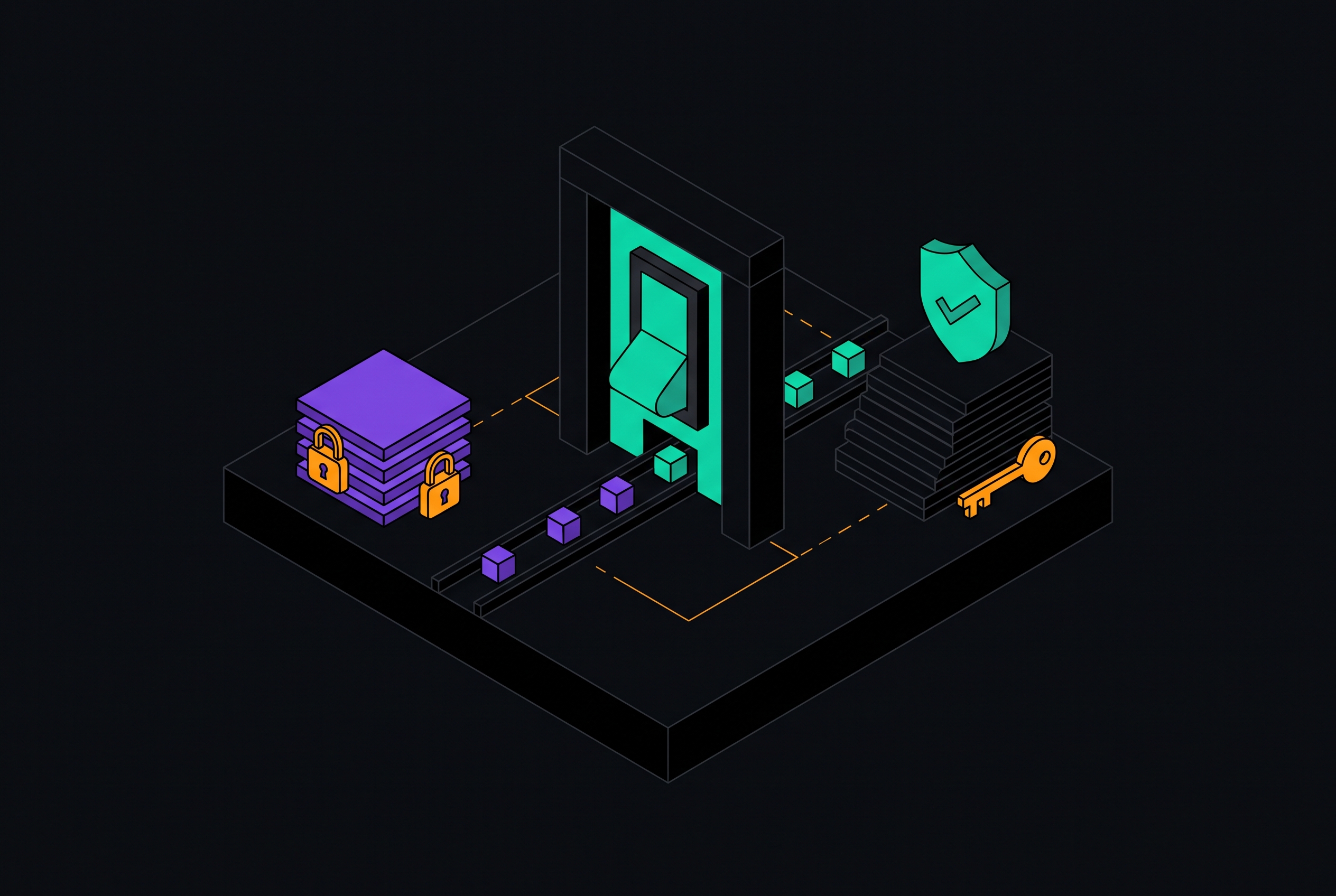
Usage attestation can serve as machine-verifiable proof only when customer consent and data governance support the claim being signed. A verifiable signature does not show that the claim has permission behind it, is accurate, or still applies. For software marketers and growth teams, the foundation is a framework that links every published claim to authorized usage data and keeps that link in place as customer relationships change.
Why the trustworthiness of an attestation depends on what sits beneath it
A vendor can publish a usage claim that a buyer understands but an AI procurement agent cannot independently verify. That gap changes the standard of proof. A human might accept a case study on faith, while an agent applies rule-based filtering to claims that are ambiguous or unverifiable at the point of query. Without a traceable basis in governed, permissioned data, an attestation can be discounted just as a logo wall is.
G2's 2026 Buyer Behavior Report found that evaluation is now the longest stage of the buying journey for 40% of buyers, surpassing research for the first time. The same report found that more than four in five buyers sourced software recommendations from an AI chatbot in the last two years. Among those buyers, AI had the most influence during shortlisting and evaluation. Proof comes under scrutiny as buyers narrow their choices. Publishing a signed endpoint meets only part of that scrutiny, because its signature establishes that the vendor signed a claim whose truth still requires verification.
What AI agents actually check when they encounter a usage claim
When an AI procurement agent encounters a usage claim, it attempts to resolve that claim against independently accessible, structured evidence. The evidence chain has to remain intact. A break can occur before the substance of the claim is assessed, when a PDF or gated form prevents the agent from parsing the evidence. This format failure excludes the vendor before evaluation begins, regardless of how persuasive the material might be to a human reader.
If a claim cannot be traced to an identified customer or a specific feature set, its meaning remains unresolved. A generic “customer since” assertion establishes neither which capabilities the customer uses nor whether those capabilities support the claim under evaluation.
Even a traceable claim may rely on data gathered without a record of the customer's authorization. When probed, that attestation exposes a governance gap beneath an otherwise accessible and specific record. These failures need different fixes because accessibility, traceability, and authorization each support a different part of the proof chain, with format open to quick correction and proper consent required before data collection.
Why customer consent is a prerequisite, not a legal formality
Consent begins both the proof process and the legal review. Without it, usage data remains an assertion a vendor made about a customer rather than evidence that customer authorized the vendor to publish. A cryptographic signature cannot bridge that distinction. An agent needs to verify both the signature and the authorization behind the data to have a basis for treating the attestation as trustworthy.
The authorization must identify the organization and the specific feature set it permits the vendor to attest to. Publication permission also needs a defined channel and format. A machine-readable endpoint served to AI agents is distinct from a case study PDF, so permission for one does not automatically cover the other. Duration and revocability must be explicit as well. A customer who agreed to appear in a 2024 case study has not necessarily authorized a live, dynamically updated attestation in 2026.
B2B customer proof already needs a record of consent, permission for each channel, and legal review before it can be published. Automation does not remove those requirements. For customers in financial services, healthcare, and government contracting that do not allow named case studies, the consent model must also allow proof to be published without naming them. A third party can confirm the customer's identity without publishing it, preserving verification while respecting the disclosure constraint. UserEvidence's 2025 research found that blind-but-verified proof earns 60% buyer trust, making this a commercially credible option rather than a weaker substitute offered only reluctantly.
The data governance layer that keeps attestation current and accurate
Once permission is in place, governance must keep the claim in line with how the customer actually uses the product. Accuracy is a continuing obligation beyond signing. The data must describe the attested customer's current product use rather than an onboarding snapshot, usage aggregated across multiple customers, or an inference from billing records. A record that was accurate when signed can become misleading when the customer changes how the product is used. If observable usage signals contradict the attestation, the signature preserves a claim that no longer deserves trust.
Minimal disclosure governs both collection and publication. The attestation data layer must remain within the scope the customer authorized, because a correctly permissioned endpoint does not excuse over-collection beneath it. That boundary must also hold at request time. An agent fetching proof should receive only the data authorized for that query context. Consent, purpose, and disclosure limits must therefore constrain access whenever evidence is served, as well as when it is collected.
Tamper-evidence keeps the history needed to check that those boundaries were followed. Changes such as churn, downgrades, or reduced use of an attested feature must appear in the attestation record and be logged so they cannot be altered after the fact. More enterprise teams are using blockchain-backed audit trails to keep records from being changed after the fact, both for consent records and for usage logs. The requirement is the integrity of the record. A living attestation must update when usage changes and be revoked when permission is withdrawn, rather than preserve an outdated version of the customer relationship.
What a compliant consent and governance framework actually contains
The framework begins with structured consent capture and documentation. Each attesting customer needs an auditable record covering identity, the authorized feature set, publication channels, duration, and revocation terms. Consent must be captured at a defined point in the relationship, with a record of when and how it was given, rather than inferred from a buried terms-of-service clause. For regulated customers, the framework must support third-party identity confirmation without public naming as a normal variant.
Scoped data access controls form the next component. They must filter usage data to the consented scope before it reaches the endpoint, while request-time controls enforce the permitted query context. Permission to attest use of Feature A does not authorize disclosure of Feature B merely because both appear in the same dataset. A team auditing its current state should check that the permitted scope controls the data supplied.
Tamper-evident audit logs record every initial capture, update, and deletion so that no one can change the record without leaving a trace. Revocation requires an immediate change to the attestation record. Withdrawal of consent, churn, or reduced feature use below the attested threshold must also produce a log entry that survives the attestation's revocation. This separates removal of a published claim from erasure of its history. Compliance teams need to be able to establish what changed even after the proof is no longer available.
Signed attestation endpoints complete the framework by binding the claim to a specific customer, feature set, and timestamp. The signature must establish what was signed and when. IETF individual contributors published Internet-Drafts in 2026 covering signed decision receipts, designated draft-farley-acta-signed-receipts, and agent route origin authorization, known as AgentROA. These are individual drafts, not IETF-endorsed standards, but they signal work toward formalizing this layer. Vendors should build toward emerging standards rather than proprietary formats, with audit-trail provability as the first practical bar for compliance teams and additional cryptographic assurance layered in as standards and economics mature.
Teams must review consent records at least at each contract renewal and regularly test governance against signals of how customers actually use the product. Those checks address different sources of drift. A permission record can fall out of date even when usage stays the same, while usage can change when authorization is still valid. Both must remain aligned with the claim served to an agent.
How feature-level attestation changes the consent conversation with customers
Feature-level proof is valuable because it answers a more precise buying question than whether an organization is a customer. That precision also asks customers to disclose more. Permission to publish customer status differs from permission to disclose use of an advanced analytics module in production, with active daily sessions from a finance team. Most current consent processes do not capture that level of authorization, especially for publication through a machine-readable endpoint.
When asking for consent, vendors should invite customers to be partners in building proof. Customers can understand the value of becoming credible references for peers in similar industries, roles, and buying stages. The scope must still remain their choice. Graduated consent tiers can include full named, feature-specific attestation, anonymized-but-verified attestation for regulated or competitively sensitive customers, and feature-category attestation for those uncomfortable with granular disclosure. A category such as “workflow automation” permits a different level of specificity from a named module, and the resulting claim must respect that distinction.
Revocation and visibility make that partnership more workable. Customers who can see exactly what is currently attested about them, and can revoke or modify permission at any time, have a clearer basis for granting consent. Customer success and legal teams should make those choices frictionless. The commercial value comes from authorized detail.
Where vendors without this framework will lose evaluations they cannot see
Filtering by agents can rule out a vendor before a human buyer thinks about talking to sales. The vendor may never know it was ruled out. G2's report found that buyers rarely change their minds once they feel good about their shortlist. IDC research published August 2026 found that the large majority of B2B technology buyers are already using AI agents as part of purchasing.
A signed endpoint without governance can fail in several ways. Its signature may remain valid after the named customer has churned or reduced use of the attested feature, leaving a discrepancy an agent can detect against other observable signals. A customer may instead find that a claim was published without permission and demand its removal, forcing revocation and leaving a gap in the proof record. For a regulated-industry prospect, the absence of an anonymized consent path can prevent credible proof from being available at all. These failures start beneath the endpoint, where publishing technology alone cannot fix them.
Letterprove observes real customer product usage and publishes a single signed attestation endpoint per vendor, backed by aggregate usage data without naming specific customers. That approach illustrates an anonymous publication model that still requires consent and governance. Its infrastructure is designed to support that underlying framework. The durable competitive advantage belongs to vendors whose proof withstands deeper verification because authorization, scope, accuracy, and audit history remain connected.